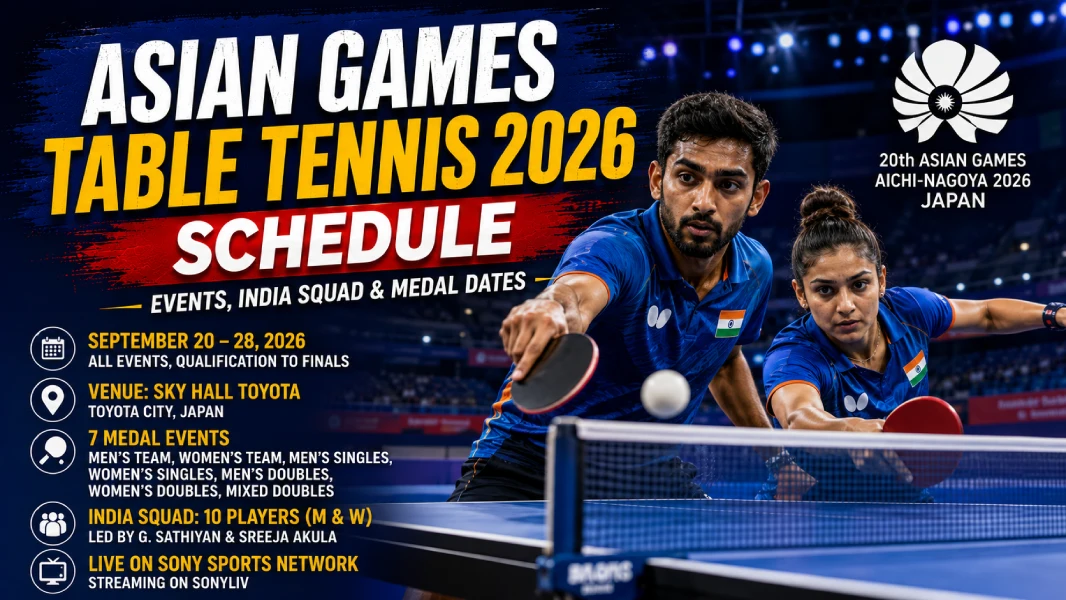
The 2026 Asian Games are being held in Japan, jointly hosted by Aichi Prefecture and the city of Nagoya, marking the country’s third time staging Asia’s biggest multi-sport event.
Aichi-Nagoya, Japan · 19 September – 4 October 2026
Asian Games 2026 is being held in Japan. The Games are officially known as the Aichi-Nagoya 2026 Asian Games, and they will run across venues in Aichi Prefecture and Nagoya City from 19 September to 4 October 2026, under the authority of the Olympic Council of Asia (OCA).
Asian Games 2026 Held in Which Country
When people search “Asian Games 2026 held in which country,” the answer is straightforward: Japan. Unlike most previous editions that were staged in a single city, the 2026 Games are a joint venture between Aichi Prefecture and Nagoya, Japan’s fourth-largest city, giving the event a wider footprint of venues, transport links and accommodation across the region rather than concentrating everything in one metro area.
This will be the 20th edition of the Asian Games since the event began in New Delhi in 1951, and it follows the 2023 Hangzhou Asian Games in China, which was itself delayed by a year because of the pandemic. The choice of Aichi-Nagoya continues a pattern where the OCA rotates hosting rights across East Asia, South Asia, Southeast Asia, West Asia and Central Asia over successive editions.
For cricket fans following the Asian Games 2026, the complete match dates, venue details and tournament format are available in our Asian Games 2026 Cricket Schedule guide.
- Host country: Japan
- Host cities: Aichi & Nagoya
- Edition: 20th Games
- Dates: 19 Sep – 4 Oct 2026
- Governing body: Olympic Council of Asia
- Previous host: Hangzhou, China (2023)
- Next host: Doha, Qatar (2030)
Why Japan Is Hosting the 2026 Asian Games
Japan is a familiar face on the Asian Games hosting list. Tokyo staged the very first Japanese edition in 1958, and Hiroshima followed in 1994. Aichi-Nagoya 2026 makes Japan one of the few countries to have hosted the Games three separate times, a distinction it shares with only a handful of Asian nations.
The bid was built around Nagoya’s existing sports infrastructure, much of which was upgraded for domestic events over the past decade, and Aichi Prefecture’s ability to host large-scale international gatherings alongside its manufacturing and automotive industry base, home to companies like Toyota. Organisers have positioned the Games as a chance to showcase central Japan beyond the usual Tokyo and Osaka tourist routes to a territorial television and travel audience.
A short history of the Asian Games
The Asian Games trace back to 1951, when New Delhi hosted the inaugural edition with just 11 countries and six sports. The event has since grown into the second-largest multi-sport gathering in the world after the Olympics, with China, South Korea, Japan, Thailand and Indonesia forming the core group of repeat hosts. Doha’s selection for 2030 and Riyadh’s for 2034 mark the Games’ first expansion into West Asia, a deliberate move by the OCA to broaden the event’s geographic and commercial reach.
Asian Games 2026 Key Dates
The Games run for just over two weeks, opening on a Saturday and closing on a Sunday to maximise weekend viewership across Asian time zones. Most team sports and qualifying rounds begin during the opening ceremony, with finals weighted toward the second week.
- Opening Ceremony: 19 September 2026 — Nagoya, Japan
- Competition Days: 20 September – 3 October 2026 — Venues across Aichi & Nagoya
- Closing Ceremony: 4 October 2026 — Nagoya, Japan
Every Sport at the 2026 Asian Games
The Aichi-Nagoya programme covers the full range of Asia-specific disciplines that have become fixtures of the Games, totalling more than 40 sports across dozens of disciplines. Broadly, the events fall into two groups: mainstream Olympic sports, and combat and precision sports, regional or emerging disciplines added specifically for an Asian audience.
Olympic Core Sports
- Athletics & swimming/aquatics
- Badminton & table tennis
- Basketball, volleyball & handball
- Football, hockey & rugby sevens
- Boxing, judo, wrestling & fencing
- Cycling, rowing, sailing & triathlon
- Gymnastics, weightlifting & shooting
Asian & Emerging Sports
- Kabaddi & sepak takraw
- Wushu & karate
- Squash & softball/baseball
- Golf, tennis & equestrian
- Canoe/kayak & modern pentathlon
- Esports (returning after Hangzhou 2023)
- Mixed martial arts & surfing (new additions for 2026)
The final confirmed sport list and event-by-event medal count are published closer to the Games by the OCA and the Aichi-Nagoya organising committee, so it’s worth checking the official schedule for last-minute additions or drops nearer the opening ceremony.
Asian Games 2026 Highlights
Participating Nations and Venues
All 45 National Olympic Committees affiliated with the Olympic Council of Asia are eligible to compete, spreading thousands of athletes to venues spread across Aichi Prefecture and Nagoya City for the two-and-a-half-week competition window. That includes the traditional powerhouses, China, Japan, South Korea and India, alongside smaller delegations from Central Asia, West Asian and Southeast Asian nations that use the Games as a stepping stone toward Olympic qualification.
Venues are split between newly built or renovated arenas in Nagoya and existing stadiums, gymnasiums and aquatic centres across Aichi Prefecture’s surrounding cities, following the multi-hub model Japan first tested domestically for national sports festivals. The main stadium, Nagoya City Mizuho Park Athletic Stadium (also known as Paloma Mizuho Stadium), anchors athletics and track ceremonies, while sailing, rowing and some outdoor disciplines use coastal and lake venues within the prefecture. Indoor sports such as badminton, table tennis, gymnastics, volleyball, basketball and combat disciplines are generally distributed across arenas in and around Nagoya to keep travel times manageable for athletes competing in multiple events over the two-and-a-half-week window.
This spread-out hosting model mirrors the approach cities have increasingly favoured since the 2010s, where a single-stadium model is paired with a network of existing regional venues rather than building an entirely new Olympic-style precinct from scratch. For Aichi and Nagoya, this also means the legacy benefit of the Games is expected to be shared across the wider prefecture rather than concentrated in the host city alone, with local governments highlighting long-term use of the upgraded facilities for domestic sport and community events after the Games conclude.
- Eligible NOCs: 45 (OCA members)
- Venue spread: Aichi Prefecture & Nagoya City
- Competition window: ~16 days
Torch Relay and Opening Ceremony
As with past editions, the build-up to Aichi-Nagoya 2026 includes a domestic torch relay that travels through cities and towns across Aichi Prefecture in the weeks before the Games, giving local communities a chance to take part before the flame arrives in Nagoya for the opening ceremony. Japan has previously used the Asian Games and Olympic ceremonies to blend traditional performance art with modern staging and technology, and organisers have signalled a similar approach for 2026, with the opening night itself expected at Nagoya City Mizuho Park Athletic Stadium and broadcast live across Asian television and streaming platforms.
The closing ceremony on 4 October is expected to follow the traditional handover segment, in which Nagoya passes the Asian Games flag to representatives from Doha, Qatar, beginning the countdown to the 2030 edition.
How to Watch the Asian Games 2026
Broadcast rights for the Asian Games are sold by the Olympic Council of Asia on a country-by-country basis, with national broadcasters and streaming platforms carrying the coverage in each participating nation. Sony Pictures Networks has secured exclusive rights across India and the wider Indian subcontinent, telecasting on the Sony Sports Network channels and streaming on SonyLIV, while viewers in other regions should check with their own national or regional broadcaster as official Asian Games 2026 site, as individual territory deals are confirmed closer to the Games.
Ticketing for individual sessions is handled through an official Games portal set up by the host organising committee, with prices varying by sport, venue, and whether the event is a preliminary round or medal final. International session tickets are able to purchase through the same portal, subject to availability. Popular sessions — such as athletics finals, swimming finals and marquee team sport matches like badminton and football tend to sell fastest, so fans planning to attend in person are advised to register early once the official ticketing window opens.
India at the 2026 Asian Games
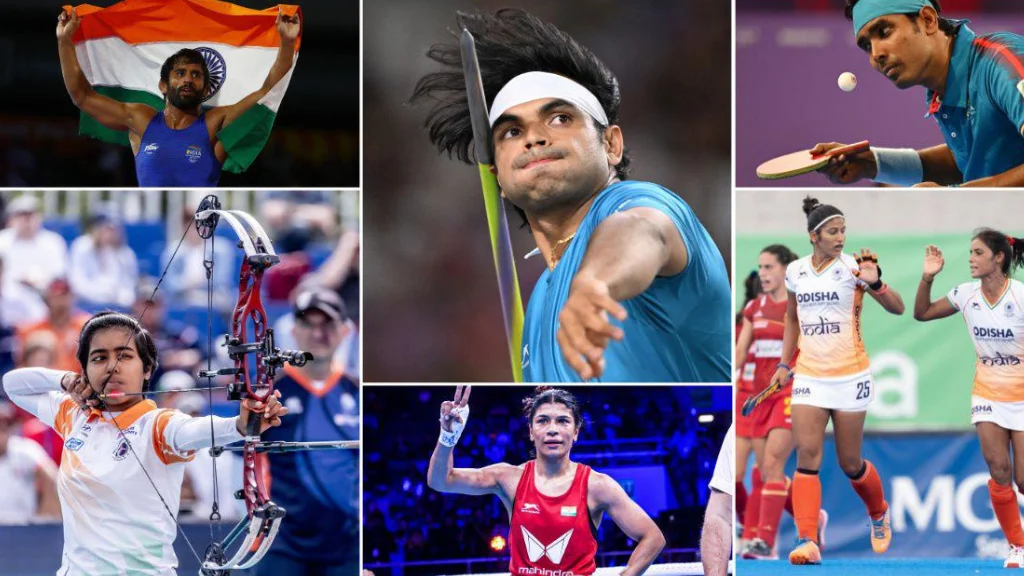
India has been one of the fastest-improving delegations at the Asian Games over the last decade, and Aichi-Nagoya 2026 is being watched closely as a form check ahead of the 2028 Los Angeles Olympics. Its performance in Hangzhou 2023, India returned its best-ever haul, finished with over a hundred medals for the first time in Asian Games history, led by shooting, athletics, archery and wrestling.
Ahead of 2026, Indian federations across athletics, badminton, boxing, wrestling and shooting have set medal-building targets to extend the streak, with well-established strongholds like kabaddi and wrestling expected to remain reliable medal sources alongside a push for more strength in swimming and racket sports. China has topped the medal table at every Asian Games since 1982 and remains the overwhelmingly likely favourite heading into Aichi-Nagoya, with Japan and South Korea usually filling out the rest of the top three. India’s trajectory has been steadily upward, moving from a top-four finish in traditional strongholds like shooting and archery to targeting a broader medal spread across track and field and wrestling as India’s medal density has grown fairly consistently.
Japan hosts, Asia watches
With Aichi and Nagoya sharing hosting duties, the 2026 Asian Games bring the continent’s biggest multi-sport event back to Japan for the first time since 1994, from the opening ceremony on 19 September to the final medals set on 4 October, before the Games move on to Doha in 2030.